
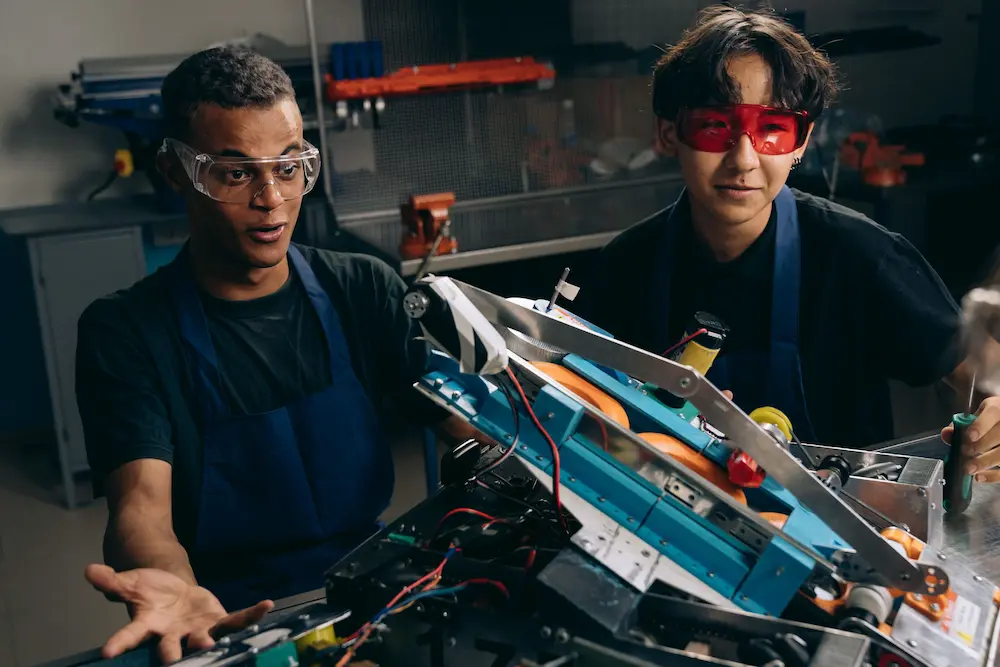
A degree can provide the academic foundation needed to enter the engineering and technical sectors, but classroom learning alone does not always prepare students for the realities of an industrial workplace. Modern employers increasingly look for candidates who understand how technical knowledge is applied in real projects, production environments, quality systems, safety procedures, and day-to-day operations.
This is where industrial training becomes valuable. Practical training helps bridge the gap between theoretical education and professional responsibilities by allowing learners to develop technical knowledge alongside workplace-oriented skills.
Whether someone is interested in mechanical engineering, piping, quality control, oil and gas, manufacturing, or other technical fields, the right training can provide a clearer understanding of how industries actually operate.
Bridging the Gap Between Education and Industry
Engineering education often involves extensive theoretical study. Students learn principles, calculations, design concepts, materials, processes, and technical standards. However, applying these concepts in an actual industrial environment can be very different.
Industrial training introduces learners to practical situations where technical knowledge needs to be applied carefully and efficiently.
For example, understanding welding theory is different from inspecting an actual welded joint. Learning about engineering drawings is different from interpreting drawings while working on a project. Similarly, studying quality control concepts in a classroom is different from maintaining inspection records and ensuring that work meets specified standards.
This practical exposure helps learners understand how their academic knowledge connects with professional responsibilities.
Why is industrial training important for engineering students?
Industrial training helps engineering students connect theoretical concepts with real-world applications. It can introduce them to workplace processes, technical documentation, safety practices, quality requirements, and professional responsibilities before they enter the industry.
Developing Practical Technical Skills
One of the biggest advantages of industrial training is the opportunity to develop skills that are directly relevant to technical workplaces.
Depending on the chosen specialization, learners may gain exposure to areas such as:
- Engineering drawings and documentation
- Quality assurance and quality control
- Welding and fabrication processes
- Piping and pipeline systems
- Inspection procedures
- Non-destructive testing
- Industrial safety
- Equipment and maintenance
- Project documentation
- Technical standards and procedures
These skills can make the transition from education to employment more manageable because learners already have an understanding of the terminology, processes, and expectations associated with their chosen field.
Understanding How Industrial Projects Work
Technical professionals rarely work in isolation. Large industrial projects involve engineers, supervisors, inspectors, technicians, project managers, contractors, suppliers, and other specialists.
Training can help learners understand how these different roles interact.
For instance, an engineer may prepare technical specifications while a quality professional verifies whether the work meets the required standards. A site supervisor may coordinate activities while technicians perform specific tasks. Documentation teams may then record inspections, approvals, and project progress.
Understanding this relationship between different functions helps aspiring professionals develop a broader view of industrial operations.
Learning to Work With Technical Documentation
Documentation is an essential part of engineering and industrial work.
Drawings, inspection reports, specifications, material certificates, checklists, procedures, quality records, and project documents are routinely used across technical industries.
A professional may have strong practical skills but still struggle if they cannot understand or maintain the required documentation.
Industrial training can introduce learners to the importance of accurate technical records and help them become more comfortable working with industry-specific documentation.
This is particularly useful in sectors where traceability, quality compliance, and safety records are critical.
Building Awareness of Industry Standards
Engineering and technical industries operate according to established standards, codes, specifications, and safety requirements.
Professionals need to understand that completing a task is not always enough. The work must often be performed according to specific technical and quality requirements.
Training can introduce learners to the importance of standards and compliance and help them understand why procedures exist.
This knowledge can become especially valuable in areas such as quality control, welding inspection, piping, fabrication, non-destructive testing, and industrial safety.
What skills can industrial training help develop?
Industrial training can help develop practical technical skills, documentation abilities, problem-solving, workplace communication, safety awareness, quality control knowledge, and an understanding of industry standards and procedures.
Why Practical Exposure Matters to Employers
Employers often look for candidates who can adapt to workplace requirements without needing to start completely from the beginning.
A candidate who understands basic industrial processes, documentation, workplace safety, and technical terminology may find it easier to adapt to a professional environment.
This does not mean that training can replace experience. Rather, it can provide a stronger starting point for someone entering the industry.
Practical learning also demonstrates initiative. Completing specialized Industrial Training Courses in Kerala can show that a candidate has taken additional steps to develop skills beyond their formal academic qualification.
Improving Problem-Solving Abilities
Industrial environments rarely operate exactly as planned.
Equipment can malfunction, materials may not meet specifications, schedules can change, and technical problems can arise unexpectedly. Professionals need to assess situations, identify possible causes, communicate with the relevant teams, and contribute to practical solutions.
Training can help learners develop this problem-solving mindset.
Instead of simply memorizing technical concepts, students can learn to ask questions such as:
- What caused the problem?
- Which procedure should be followed?
- What information is required before making a decision?
- Does the work meet the specified requirements?
- What risks need to be considered?
- Who needs to be informed?
These habits can become valuable throughout an engineering career.
Developing Workplace Communication Skills
Technical expertise is only one part of professional success.
Engineers and technical professionals regularly communicate with colleagues, supervisors, clients, contractors, inspectors, and other stakeholders. They may need to explain technical information, prepare reports, participate in meetings, or communicate problems clearly.
Industrial training can provide opportunities to develop these communication skills alongside technical knowledge.
Learning how to communicate accurately and professionally can make a significant difference, particularly when working on complex projects involving multiple teams.
Can industrial training improve career readiness?
Yes. Industrial training can improve career readiness by familiarizing learners with workplace expectations, technical terminology, documentation, safety practices, communication, and practical problem-solving. These experiences can make the transition from academic study to an entry-level technical role more manageable.
Choosing Training That Matches Your Career Goals
Not every technical professional needs the same type of training.
Someone interested in quality control may benefit from learning about inspection procedures, documentation, welding inspection, and quality systems. An aspiring piping professional may require knowledge of piping layouts, materials, fabrication, and related standards.
Similarly, individuals interested in industrial safety, NDT, MEP, or other technical disciplines should choose training that aligns with their intended career path.
Before enrolling, learners should consider the course curriculum, practical components, industry relevance, trainer expertise, duration, and the type of career opportunities associated with the specialization.
A reputed Industrial Training Academy in Kochi can provide learners with structured technical education while helping them understand how different industrial roles function in practice.
Training Can Support Career Confidence
Entering the engineering or technical sector for the first time can be challenging. Graduates may have the required academic qualifications but remain uncertain about how those qualifications translate into workplace responsibilities.
Practical training can reduce some of this uncertainty.
When learners become familiar with technical terminology, documentation, processes, equipment, safety requirements, and professional expectations, they may feel more prepared to approach interviews and entry-level roles.
This confidence is not simply about knowing answers. It comes from understanding how technical knowledge is applied.
The Importance of Continuous Learning
Industrial training should not be viewed as the final step in professional development.
Engineering and technical industries continue to evolve. New technologies, software, standards, equipment, automation systems, and working methods are introduced regularly.
Professionals who continue learning are better positioned to adapt to these changes.
After gaining foundational training and entering the workforce, individuals can continue developing through certifications, specialized courses, on-the-job learning, workshops, and professional experience.
A mindset of continuous improvement can become one of the most valuable qualities in a long-term technical career.
Conclusion
Industrial training plays an important role in preparing aspiring professionals for engineering and technical industries. By connecting theoretical knowledge with practical applications, it can help learners understand workplace processes, technical documentation, safety requirements, quality standards, communication, and problem-solving.
The right training does not guarantee employment, but it can provide a stronger foundation from which professionals can begin building their careers.
For students and graduates entering competitive technical fields, developing practical skills alongside academic qualifications can make the transition into industry more informed, confident, and productive.
