

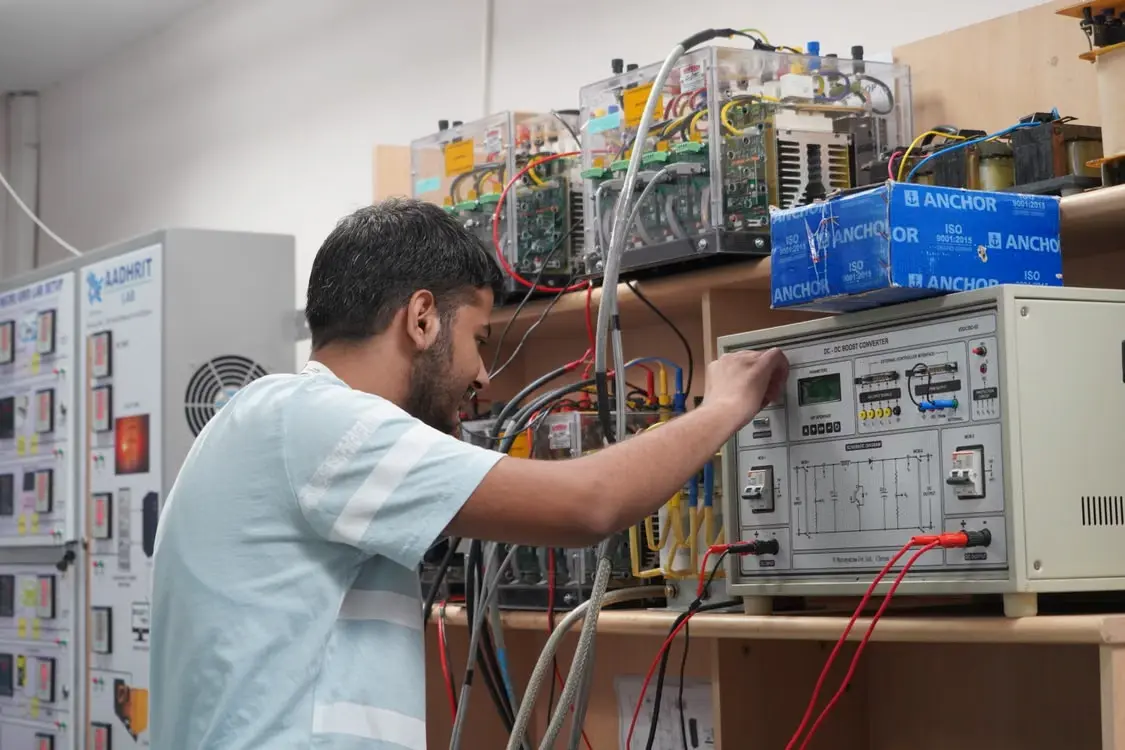


If you’ve ever wondered how engineers can be confident that a weld deep inside a pressure vessel or a pipeline buried underground is free of dangerous defects, the answer lies with Non-Destructive Testing (NDT) technicians. These professionals use specialized techniques to inspect materials and components without damaging or altering them, playing a critical role in ensuring safety across oil and gas, construction, manufacturing, and power generation industries. Here’s a complete beginner’s guide to what the job actually involves and how to get started.
The Core Job of an NDT Technician
An NDT technician’s primary responsibility is to detect flaws cracks, porosity, corrosion, lack of fusion in welds, internal voids that could compromise the safety or performance of a component, without cutting into or destroying the part being tested. This is what distinguishes NDT from destructive testing methods, where a sample piece is deliberately broken or sectioned to examine its internal structure.
On a typical day, an NDT technician might inspect welds on a newly fabricated pressure vessel, measure wall thickness on an in-service pipeline to monitor corrosion, or examine a structural steel component for fatigue cracks. The specific tasks vary depending on which testing methods the technician is certified in and which industry they work in, but the underlying goal remains the same: catching defects before they cause failures.
Common Testing Methods NDT Technicians Use
Most NDT technicians specialize in one or more of the following methods:
Ultrasonic Testing (UT) sending high-frequency sound waves through a material to detect internal flaws and measure thickness, widely used for weld inspection and corrosion monitoring.
Radiographic Testing (RT) using X-rays or gamma rays to capture an internal image of a component, revealing defects like porosity and inclusions, particularly valuable for critical pipeline and pressure vessel welds.
Magnetic Particle Testing (MT) detecting surface and near-surface defects in ferromagnetic materials using magnetic fields and fine particles that cluster around flaws.
Liquid Penetrant Testing (PT) revealing surface-breaking defects on both magnetic and non-magnetic materials using a penetrant dye and developer.
Many technicians build competency in multiple methods over the course of their career, since projects often require inspectors certified across several techniques.
A Day in the Life
Depending on the work environment, an NDT technician’s day might involve fieldwork on a construction site, work inside a fabrication shop, or inspection duties at an operating industrial facility. Fieldwork often means working around active construction or operational activities, sometimes at height, in confined spaces, or in challenging weather conditions, which is why safety training is a core part of any NDT technician’s skill set.
The job also involves substantial documentation. Every inspection needs to be recorded accurately the method used, the equipment settings, the results, and whether the component passed or failed against the applicable code or specification. These records become part of the permanent quality file for a project, so accuracy and attention to detail in reporting are just as important as the physical inspection work itself.
Certification Levels and What They Mean
NDT technicians are certified according to a tiered system: Level 1 technicians perform tests under supervision following established procedures, Level 2 technicians can independently set up, conduct, and interpret tests, and Level 3 technicians can develop procedures, train other technicians, and oversee an entire NDT program. Most technicians start at Level 1, gain practical experience, and progress to Level 2, which is where the majority of independent, hands-on inspection responsibility sits.
Certification is method-specific, meaning a technician holds separate certifications for each method (UT, RT, MT, PT) they’re qualified to perform, based on completing the required training, examinations, and documented practical experience hours.
Skills That Make a Good NDT Technician
Beyond technical procedure knowledge, effective NDT technicians typically have:
- Strong attention to detail and patience, since interpreting subtle indications requires careful, unhurried examination
- Good eyesight, particularly for methods like PT and MT that rely on visual interpretation
- Mechanical aptitude and comfort working with specialized testing equipment
- The integrity to report defects accurately, even when doing so creates schedule pressure for a project
- Physical stamina for fieldwork that may involve awkward positions, heights, or confined spaces
For beginners looking to enter the NDT field, practical training can make the transition from theoretical knowledge to workplace responsibilities much easier. Conztek offers industry-focused training that helps learners develop a foundation in NDT methods, inspection practices, and practical skills needed to prepare for technical roles in quality control and inspection.
Career Path and Growth Opportunities
Entry into the field typically starts with Level 1 certification in one or two methods, often gained through a structured training program combined with supervised on-the-job practice. From there, technicians progress to Level 2 certification, taking on independent inspection responsibility and often expanding into additional testing methods to increase their versatility and employability.
Experienced technicians can advance to Level 3 certification, which opens doors to roles like NDT Supervisor, Quality Manager, or NDT Consultant, overseeing inspection programs and training the next generation of technicians. The career also offers strong international mobility certified NDT technicians are in continuous demand across Gulf countries, where large-scale oil, gas, and infrastructure projects require rigorous inspection standards.
How to Get Started
For beginners, the most effective entry point is structured training that combines theoretical instruction with genuine hands-on practice using real testing equipment, since NDT is fundamentally a practical, skill-based profession. Look for training programs that prepare you not just to pass certification exams, but to develop the interpretive judgment that comes from repeated, supervised practice. A dedicated Non-destructive test (NDT) course is designed to build exactly this foundation, covering multiple testing methods with practical training to prepare beginners for certification and real-world inspection work.
Final Thoughts
NDT technicians play an unglamorous but essential role in industrial safety, quietly ensuring that the welds, pipelines, and pressure vessels we depend on are free from defects that could lead to catastrophic failure. For beginners with an interest in hands-on technical work, strong attention to detail, and a preference for tangible, safety-critical responsibility, NDT offers a clear certification path, strong industry demand, and long-term career growth from entry-level inspection work to senior technical leadership roles.
